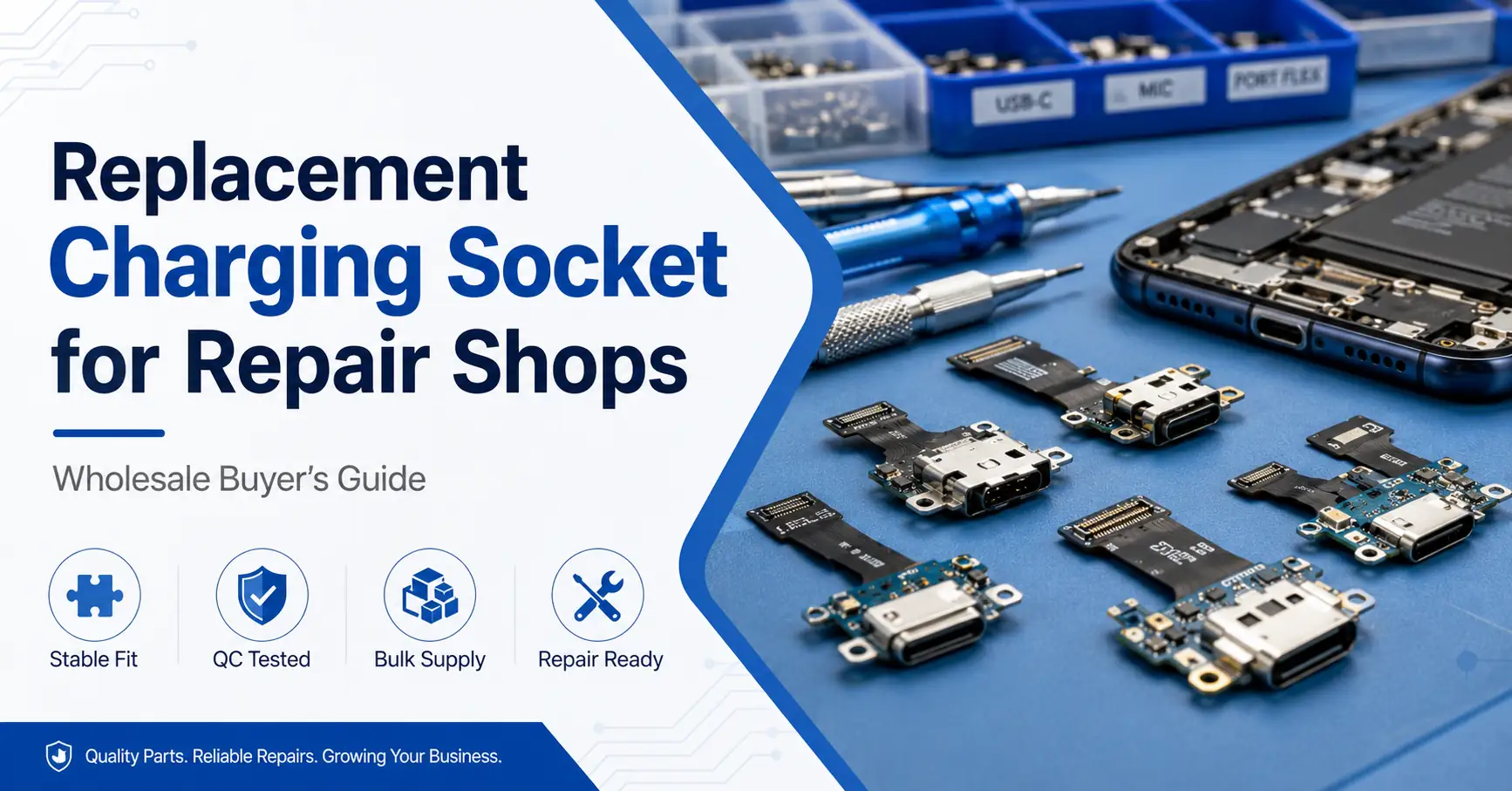

Sourcing Replacement charging socket for repair shops is not only about finding a low-cost part. For professional phone repair stores, refurbishment factories, and spare parts distributors, the real value comes from accurate model matching, stable charging performance, durable connector quality, safe packaging, and reliable wholesale support.
The charging socket is one of the most frequently repaired parts in smartphones. When this component fails, users may experience slow charging, no charging, loose cable connection, data transfer failure, or repeated charging interruption. For repair shops, a poor-quality charging socket can quickly lead to customer complaints, return repairs, and wasted labor time.
This guide explains what repair businesses should check before buying replacement charging sockets in bulk.
For more mobile phone parts and accessory supply information, buyers can visit CPG.
Why Charging Socket Replacement Is Common in Repair Shops
The phone charging socket is used every day. Users plug in cables repeatedly, use different chargers, carry phones in dusty pockets, and sometimes force the cable into the port at the wrong angle. Over time, the charging socket may become loose, worn, oxidized, bent, or internally damaged.
Repair shops often replace charging sockets when customers report:
- phone not charging
- slow charging
- unstable charging connection
- loose cable fit
- damaged Type-C or Micro USB port
- no data transfer
- overheating near the charging area
- charging only at a certain angle
- visible dust, corrosion, or deformation inside the port
Because these problems are common, Replacement charging socket for repair shops is a high-demand product category for daily repair inventory.
Who Needs Replacement Charging Socket Wholesale Supply?
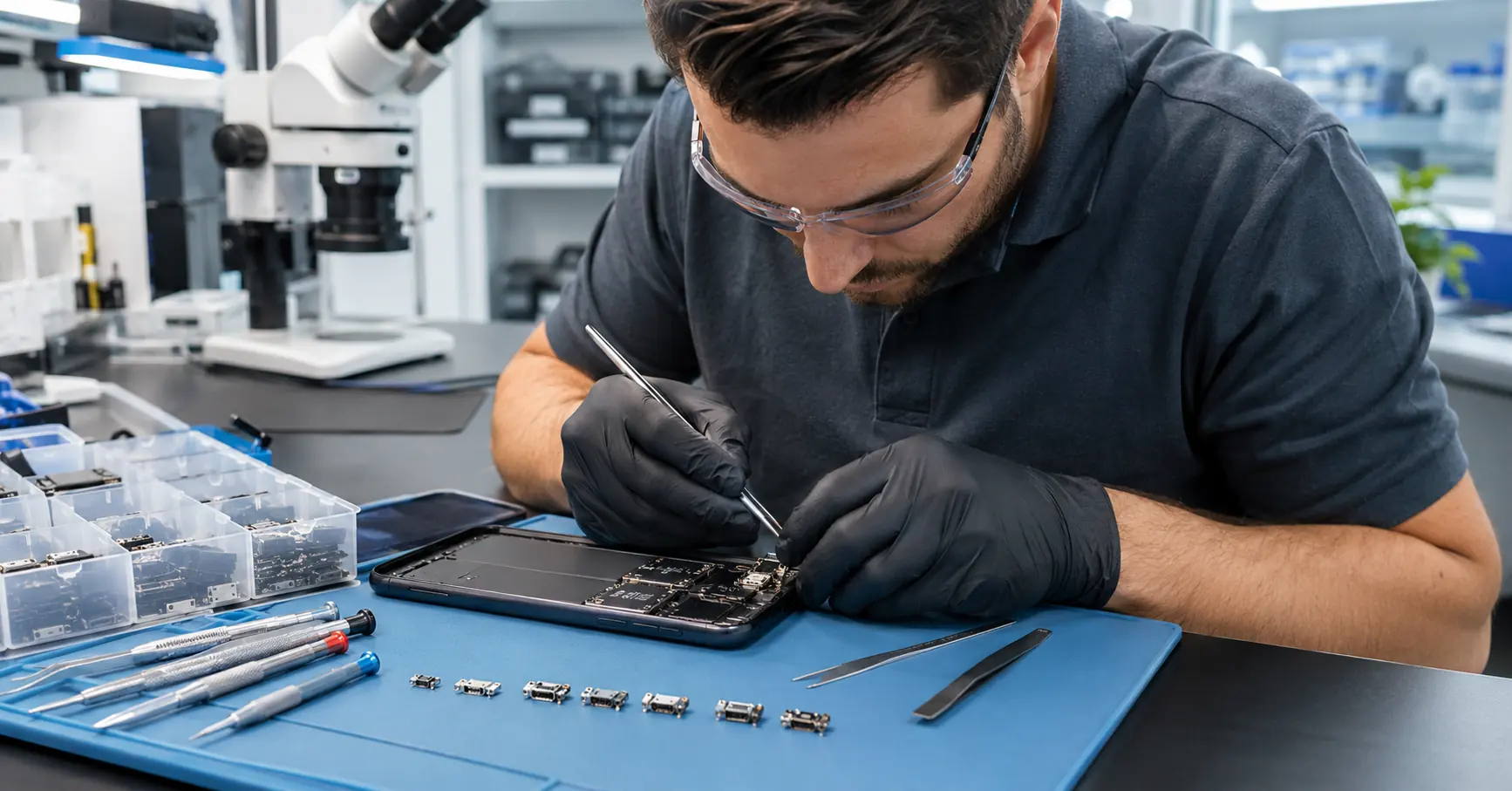
Replacement charging sockets are mainly used by B2B buyers in the mobile phone repair and aftermarket parts industry.
Independent Repair Shops
Local repair shops need fast-moving charging socket replacement parts for popular phone models. Their main concerns are stable fit, small-batch availability, and lower after-sales risk.
Repair Chain Stores
Repair chains need consistent parts quality across different branches. A stable supplier helps them maintain repair standards and reduce customer complaints.
Refurbishment Factories
Refurbishment factories repair used phones in larger volumes. They need bulk charging sockets with consistent quality, clear model labels, and efficient packaging.
Phone Parts Distributors
Distributors need multiple connector types and wide model coverage. Their customers may include repair shops, phone accessory stores, online sellers, and regional resellers.
Online Repair Parts Sellers
E-commerce sellers need charging socket replacement parts that are easy to identify, well packed, and suitable for repeat orders.
What Is a Phone Charging Socket?
A phone charging socket is the physical connector that receives the charging cable. Depending on the phone model, it may be part of a larger charging port flex cable, dock connector board, or charging interface assembly.
Common names include:
- phone charging socket
- charging port socket
- Type-C charging socket
- Micro USB charging socket
- Lightning charging socket
- USB charging connector
- dock connector
- charging interface replacement part
- phone charging port replacement
In wholesale purchasing, these terms are sometimes used together. Buyers should always confirm whether they need only the socket connector or the full charging port flex assembly.
Common Types of Replacement Charging Sockets
Different phones use different charging interface structures. A professional supplier should help buyers confirm the correct product type.
| Product Type | Main Feature | Best For |
|---|---|---|
| Type-C Charging Socket | Common in modern Android phones | Repair shops and distributors |
| Micro USB Charging Socket | Used in older or budget devices | Emerging repair markets |
| Lightning Charging Socket | Used for selected iPhone repairs | Apple repair parts sellers |
| Charging Port Flex Assembly | Socket with flex cable or small board | Full charging interface repair |
| Dock Connector Assembly | Multi-function charging and signal part | Refurbishment factories |
| Fast-Charging Socket | Supports stable current transmission | High-demand repair markets |
| OEM-Compatible Charging Socket | Model-specific fit and structure | Bulk repair and service programs |
The best option depends on phone model, repair method, connector layout, and technician skill level.
Replacement Charging Socket vs Charging Port Flex Cable
Many buyers confuse charging sockets with charging port flex cables. They are related but not always the same.
| Item | Description | Best For |
| Charging Socket | The physical connector where the cable plugs in | Socket-level replacement |
| Charging Port Flex Cable | Flexible circuit with charging socket and related connections | Full charging interface repair |
| Dock Connector Board | Small board with charging and signal components | Complex phone repairs |
| Full Charging Assembly | Complete part including socket, flex, board, and contacts | Faster replacement and refurbishment |
For repair shops, full charging port assemblies are often easier to install. For experienced technicians, replacing only the socket may reduce cost, but it requires better soldering skill and correct tools.
Key Quality Points Buyers Should Check
When sourcing Replacement charging socket for repair shops, buyers should evaluate more than appearance.
1. Connector Fit
The socket should fit charging cables smoothly. If the port is too loose, too tight, or poorly aligned, users may experience unstable charging.
2. Contact Stability
The internal metal contacts must provide stable electrical connection. Weak contacts may cause intermittent charging or no charging.
3. Material Durability
The housing and metal pins should withstand repeated plugging and unplugging. Poor materials may deform or wear quickly.
4. Soldering Compatibility
For socket-only replacement, the socket should match the board pad layout and allow stable soldering.
5. Model Accuracy
Small model differences can affect connector size, pin position, board shape, or installation angle. Wrong matching can cause repair failure.
6. Charging Performance
The socket should support stable current flow according to the phone’s charging design.
7. Batch Consistency
Repair businesses need repeatable quality across multiple orders, not just one good sample.
Technical Specifications to Confirm Before Ordering
Before placing a wholesale order, buyers should prepare clear specifications.
| Item | What to Confirm |
| Compatible Phone Model | Exact model name and version |
| Connector Type | Type-C, Micro USB, Lightning, or other |
| Product Form | Socket only, flex cable, board, or full assembly |
| Pin Layout | Contact position and soldering structure |
| Function Support | Charging only, data transfer, microphone, or signal function |
| Material | Metal contacts, plastic housing, PCB or flex material |
| Installation Method | Soldering, flex connection, screw fixing, or adhesive |
| Testing Method | Charging test, plug test, visual inspection |
| Packaging | Anti-static bag, tray, foam box, or carton |
| Order Type | Sample, small batch, mixed model, or bulk order |
Clear specifications help reduce communication mistakes and improve order accuracy.
QC Testing a Supplier Should Provide
For repair shops, quality control is essential. A defective charging socket may pass a quick appearance check but fail after installation.
Recommended QC checks include:
| QC Item | Why It Matters |
| Appearance Inspection | Checks deformation, dirt, oxidation, and damaged pins |
| Plug-In Test | Confirms cable insertion smoothness and tightness |
| Charging Function Test | Checks whether the phone can charge normally |
| Data Transfer Test | Important when the socket supports data connection |
| Contact Stability Test | Helps reduce intermittent charging issues |
| Soldering Position Check | Important for socket-only replacement |
| Model Fit Check | Confirms size, layout, and connector position |
| Batch Sampling | Maintains consistency across wholesale orders |
| Packaging Check | Prevents damage during international shipping |
Instead of asking only for the lowest price, buyers should ask suppliers how they test replacement charging sockets before shipment.
Common Purchasing Risks
Low-quality charging sockets can create serious after-sales problems for repair shops.
Wrong Connector Type
Some models may look similar but use different connector structures. A wrong socket can waste technician time and delay repair jobs.
Loose Cable Connection
If the port does not hold the cable firmly, customers may return with the same charging problem.
Weak Internal Contacts
Poor contact quality can cause slow charging, unstable charging, or data transfer failure.
Poor Soldering Fit
For socket-only replacement, inaccurate pin layout may make installation difficult.
No Clear Model Labeling
Distributors and repair shops may mix similar parts if labels are unclear.
Weak Packaging
Small charging sockets can be bent, scratched, or damaged during transport if packaging is poor.
How to Compare Replacement Charging Socket Suppliers
When choosing a supplier, price should not be the only standard.
| Comparison Factor | Reliable Supplier | High-Risk Supplier |
| Product Range | Covers multiple phone brands and connector types | Limited model selection |
| Model Confirmation | Helps confirm exact compatibility | Uses vague product names |
| QC Testing | Tests fit, charging, contact, and appearance | Only checks basic appearance |
| Packaging | Uses anti-static and protective packaging | Weak or mixed packaging |
| Bulk Supply | Supports repeat orders and mixed models | Inconsistent stock |
| Communication | Gives clear specifications | Slow or unclear response |
| After-Sales | Has clear handling process | No responsibility after shipment |
| Repair Market Knowledge | Understands repair shop needs | Only sells generic parts |
A reliable supplier should help repair shops reduce sourcing risk and improve repair efficiency.
How CPG Supports Repair Shop Buyers
CPG focuses on mobile phone parts and accessories wholesale for B2B buyers. Its product range covers LCD repair parts, small phone parts, charging components, batteries, charger adapters, data cables, wireless chargers, screen protectors, cases, repair tools, and related phone accessories.
Buyers can explore available product categories at the CPG products page.
For repair shops sourcing replacement charging sockets, CPG can help with model matching, product selection, wholesale supply planning, and related phone repair parts sourcing.
This is useful because repair shops rarely buy only one part. A buyer sourcing charging sockets may also need:
- charging port flex cables
- LCD display replacement parts
- phone batteries
- data cables
- charger adapters
- repair tools
- screen protectors
- phone cases
- small internal phone parts
A one-stop supply model can reduce communication time and make inventory planning easier.
Sample Order vs Bulk Order
For new buyers, sample testing is important before placing a larger order.
| Stage | What to Check | Buyer Goal |
| Sample Order | Fit, charging, plug tightness, appearance | Confirm basic quality |
| Small Batch Order | Model accuracy, packaging, repair feedback | Test real usage |
| Bulk Order | Batch consistency, lead time, carton protection | Build stable stock |
| Repeat Order | Quality stability and after-sales response | Maintain long-term supply |
Repair shops can start with fast-moving models first, then expand to wider connector types as local demand becomes clearer.
Packaging Requirements for Charging Socket Wholesale
Replacement charging sockets are small and delicate. Good packaging helps prevent deformation, oxidation, and loss during shipment.
Recommended packaging details include:
- anti-static bags
- model labels
- separated trays
- foam protection
- sealed inner bags
- organized cartons
- clear packing list
- batch separation by model
For distributors and online sellers, clear packaging also helps reduce picking mistakes and customer complaints.
Practical Buying Checklist
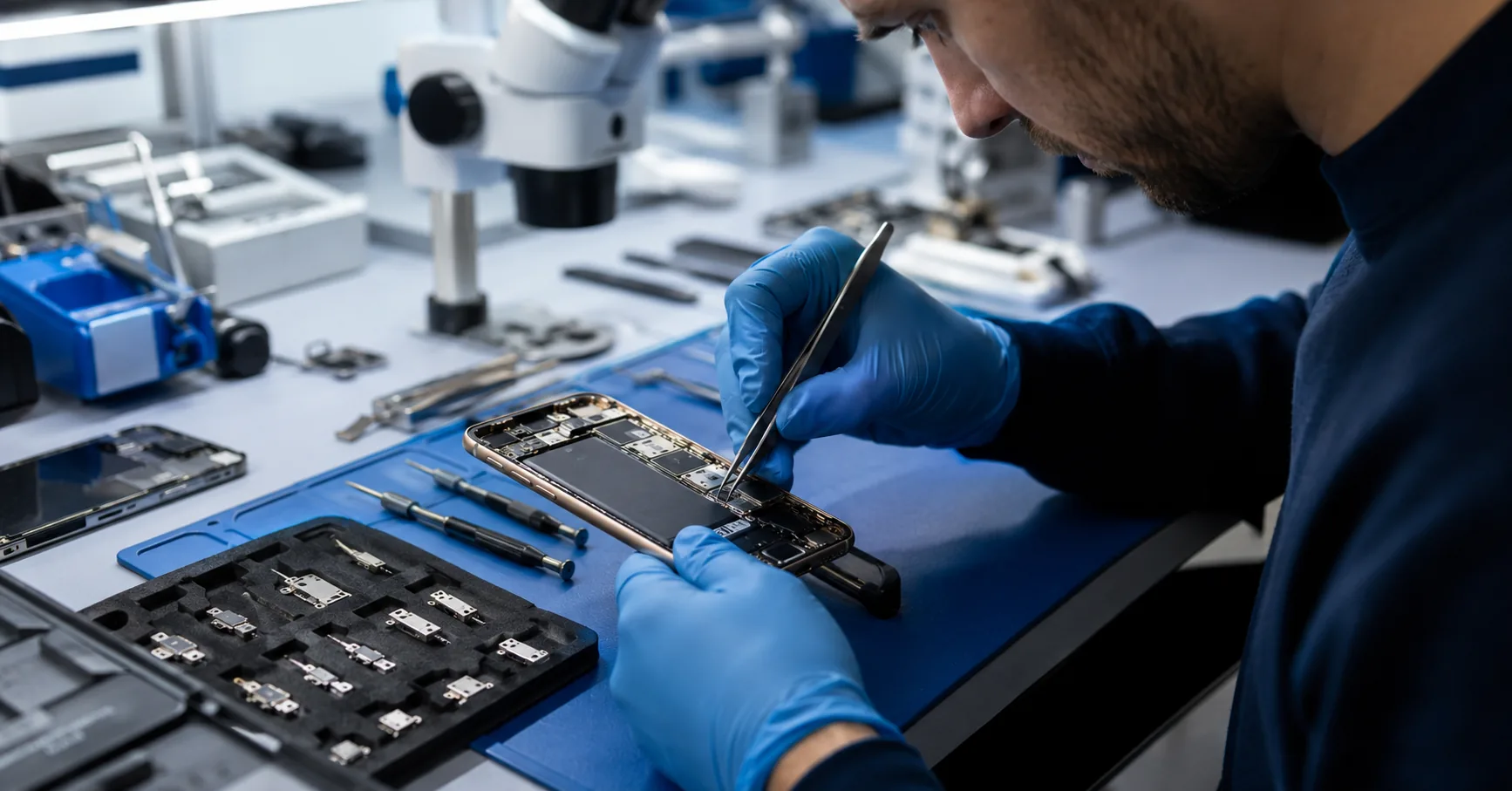
Before buying Replacement charging socket for repair shops, use this checklist:
- Confirm the exact phone model and version.
- Decide whether you need socket only or full flex assembly.
- Check connector type: Type-C, Micro USB, or Lightning.
- Ask about charging and plug-in testing.
- Confirm model labeling and packaging.
- Test samples before larger orders.
- Ask whether mixed-model orders are supported.
- Confirm MOQ and lead time.
- Clarify after-sales handling.
- Choose a supplier with repair parts experience.
For more repair-part sourcing guides, buyers can also visit the CPG blog.
FAQ: Replacement Charging Socket for Repair Shops
1. What is a replacement charging socket?
A replacement charging socket is the phone connector part used to replace a damaged charging port. It may be sold as a socket-only component or as part of a charging port flex assembly.
2. Who needs Replacement charging socket for repair shops?
Repair shops, repair chains, refurbishment factories, distributors, and online repair parts sellers need replacement charging sockets for daily phone repair demand.
3. What should I check before buying charging sockets in bulk?
You should check connector type, model compatibility, contact stability, charging performance, soldering layout, packaging, MOQ, and supplier QC process.
4. Is a charging socket the same as a charging port flex cable?
Not always. A charging socket is the connector itself, while a charging port flex cable may include the socket, flex circuit, board, microphone contacts, and other related components.
5. Which connector types are most common?
Type-C, Micro USB, and Lightning are the most common charging connector types in the phone repair market.
6. Can repair shops order mixed models?
Many repair shops prefer mixed-model orders to cover different customer repair needs. Buyers should confirm MOQ and packaging details with the supplier.
7. Why is QC important for charging sockets?
QC helps reduce loose connection, unstable charging, poor contact, data transfer failure, and repeated repair complaints.
8. What packaging is suitable for replacement charging sockets?
Anti-static bags, trays, foam protection, model labels, and sealed cartons help protect charging sockets during wholesale shipping.
9. How can repair shops reduce defective part risk?
Repair shops can reduce risk by testing samples, confirming model compatibility, checking QC standards, and choosing suppliers with clear after-sales support.
10. How can I request a quote for charging sockets?
Prepare your model list, connector type, quantity, packaging needs, and target market. Then contact the supplier for MOQ, sample availability, lead time, and wholesale pricing.
Conclusion
Choosing a reliable supplier for Replacement charging socket for repair shops can directly affect repair success rate, customer satisfaction, and long-term purchasing cost. The best supplier is not simply the cheapest one. It is the supplier that can provide accurate model matching, stable connector quality, proper QC testing, protective packaging, and responsive support.
If you are sourcing charging sockets, charging port flex cables, phone repair parts, or related mobile phone accessories in bulk, CPG can help you compare suitable options and prepare a wholesale supply solution for your repair business.
To discuss product models, bulk orders, or repair parts sourcing needs, contact CPG here: Contact CPG.