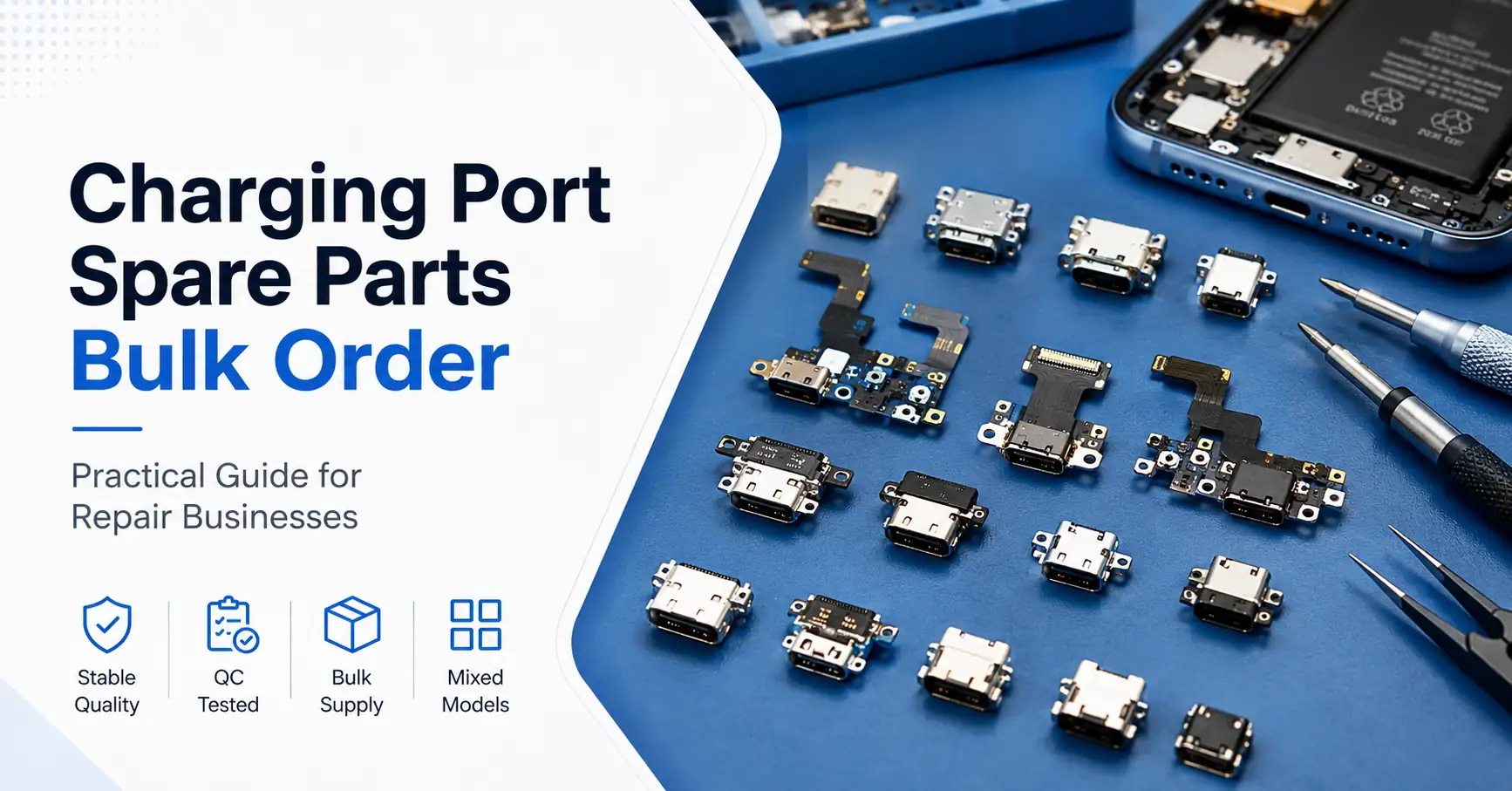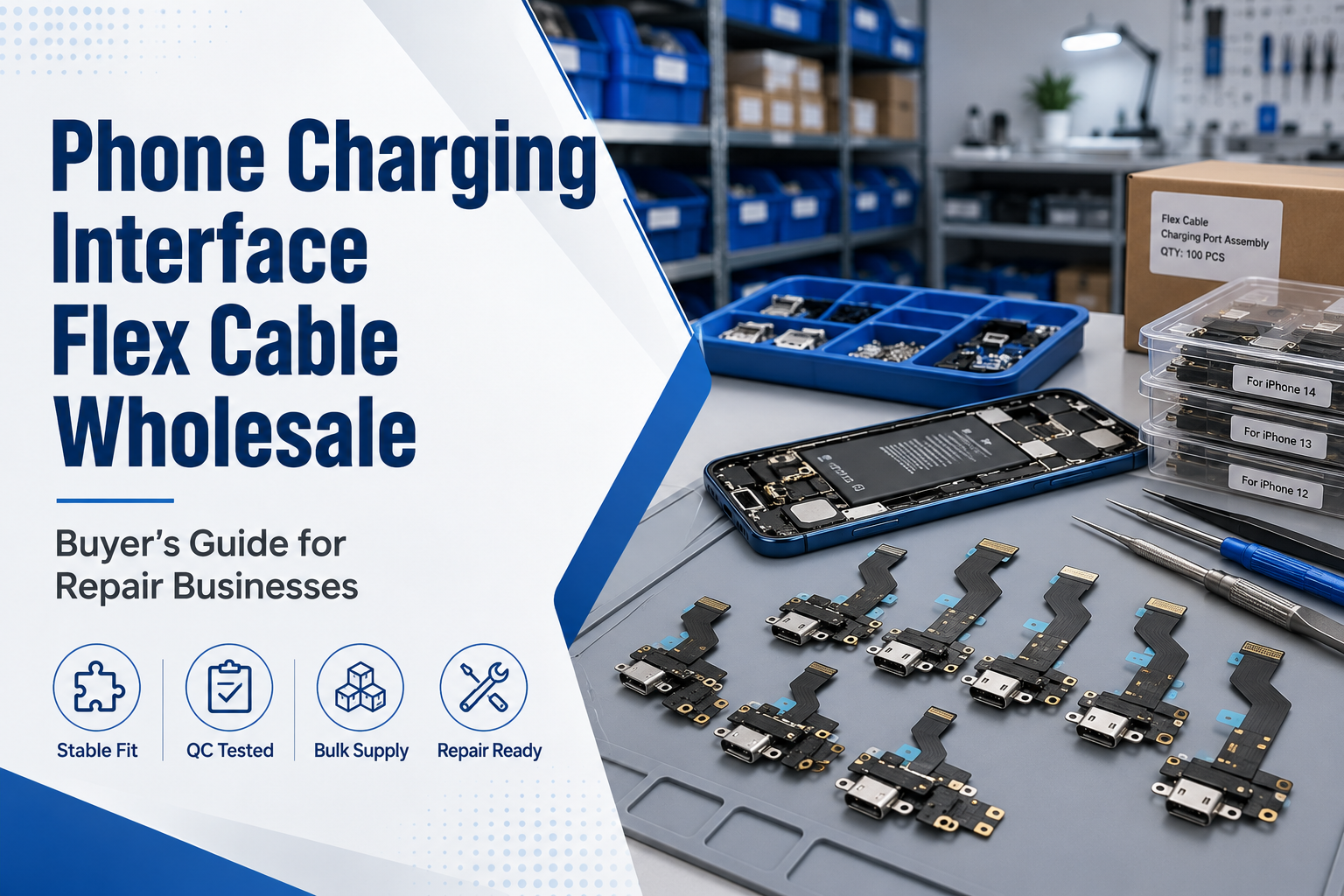

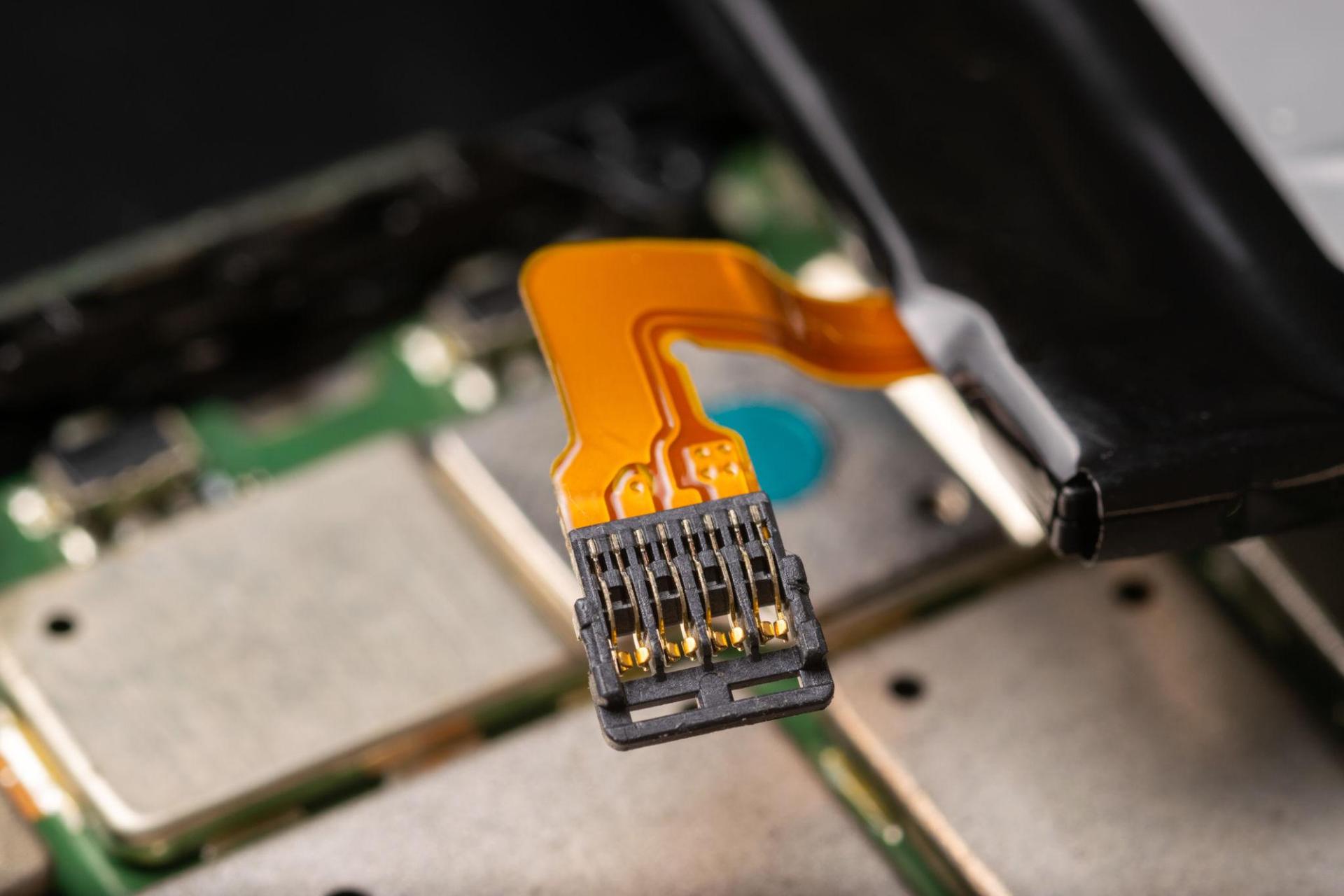
In modern smartphone repair, charging problems are not always caused by the connector itself. In many cases, the failure lies in the internal flex cable that connects the port to the motherboard. Choosing a reliable OEM charging port flex cable supplier becomes critical for ensuring stable charging performance, long-term durability, and consistent repair quality across different devices.
Manufacturers with proven experience—such as those detailed on the About Us page (https://www.cpglcd.com/en/about-us)—typically provide better consistency in both material selection and circuit precision.
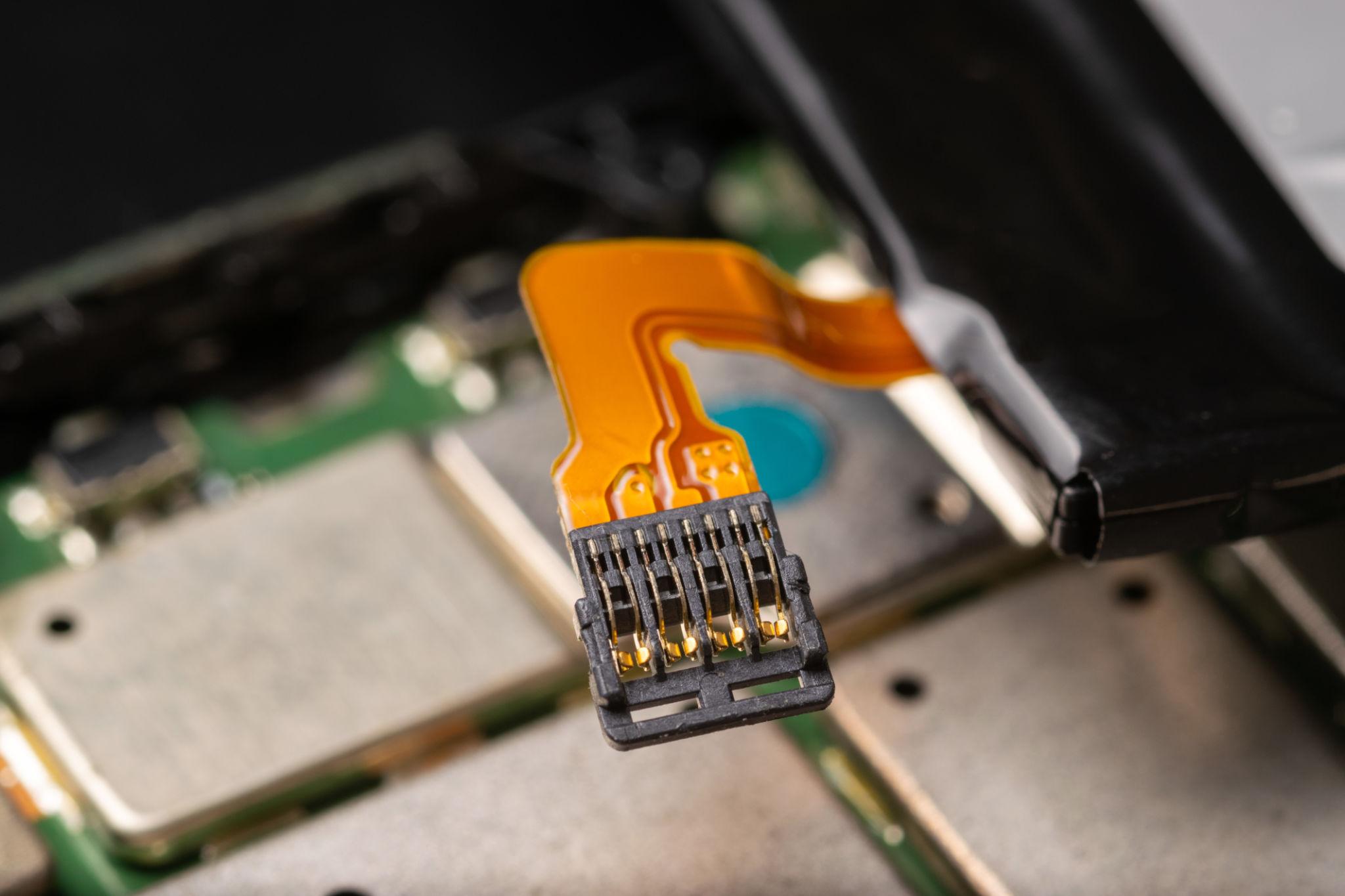
Why Charging Flex Cables Fail in Real Repair Scenarios
In daily repair operations, technicians frequently encounter issues such as:
- Intermittent charging even after port replacement
- Loose internal connections
- Signal instability affecting fast charging
- Heat-related damage to flexible circuits
These failures often originate from low-quality flex cables. A professional OEM charging port flex cable supplier ensures that every component meets electrical and structural requirements for modern devices.
For example, using verified replacement parts like those listed on the product pagehttps://www.cpglcd.com/en/productshelps maintain stable performance across multiple repairs.
Engineering Requirements Behind OEM Flex Cable Design
Unlike standard spare parts, flex cables must match the device’s internal layout precisely.
Key requirements include:
- Accurate circuit routing for signal stability
- Flexible yet durable materials for repeated bending
- Resistance to heat and electrical stress
- Compatibility with fast-charging protocols
A qualified OEM charging port flex cable supplier delivers components that integrate seamlessly without requiring modification, especially in complex smartphone motherboard layouts.
CPG Manufacturing Capabilities for Flex Cable Supply
CPG focuses on OEM-level production to support both repair and manufacturing needs:
- Precision flexible PCB design for stable current flow
- High-durability materials to prevent internal breakage
- Multi-layer protection to reduce signal interference
- Strict QC testing for consistency across batches
Working with an experienced OEM charging port flex cable supplier helps reduce failure rates and improve repair success rates, particularly in bulk refurbishment operations.
Comparison: Standard Flex Cable vs OEM Supply
| Feature | Standard Flex Cable | OEM Flex Cable (CPG) |
|---|---|---|
| Fit Accuracy | Generic | Model-specific |
| Signal Stability | Variable | Stable |
| Durability | Moderate | High |
| Compatibility | Limited | Full match |
| Batch Consistency | Inconsistent | Controlled |
Applications in Repair and Manufacturing
The demand for flex cable replacement is growing in:
- Smartphone repair shops
- Refurbishment factories
- Spare parts distributors
- OEM device assembly
In all these scenarios, sourcing from an OEM charging port flex cable supplier ensures long-term reliability and consistent output quality.
How to Choose the Right Supplier
When evaluating suppliers, focus on:
- Circuit precision and design capability
- Material quality and durability
- Compatibility with multiple phone models
- Batch consistency and testing standards
- OEM customization support
If you need consistent bulk supply or customization, it is recommended to contact a verified supplier directly viahttps://www.cpglcd.com/contact-usto ensure proper technical support.
FAQ
Q1: Can flex cables affect charging speed?
Yes, poor-quality cables can reduce voltage stability and charging efficiency.
Q2: Are OEM flex cables necessary for repairs?
For stable long-term performance, OEM-level parts are strongly recommended.
Q3: Do these cables support fast charging?
Yes, high-quality flex cables are designed for fast-charging compatibility.
Reliable Flex Cable Supply Defines Repair Quality at Scale
Reliable components are the foundation of successful repairs. Choosing a proven OEM charging port flex cable supplier ensures stable performance, reduced failure rates, and scalable operations for your business.
Instead of dealing with inconsistent parts, working with a supplier that combines manufacturing capability, product coverage, and technical support can significantly improve both repair efficiency and long-term customer satisfaction.